


























residence qualification:
3 years
After obtaining permanent residence
Choose a Jurisdiction
RULATAM Solutions
rulatam
A complete analysis of the naturalization procedure in Paraguay: duration of residence, permanent residence, Investor Pass, SUACE, dual citizenship, taxes, renunciation of citizenship, rights and restrictions of naturalized citizens.
Citizenship and passport
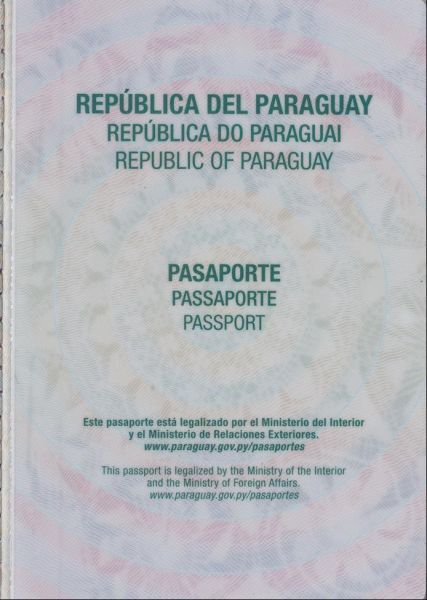
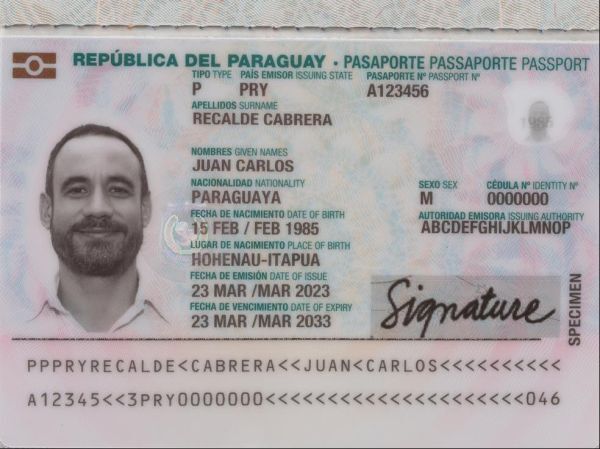
A foreign national may apply for naturalization after at least three years of permanent residence. The applicant must be an adult, engage in a profession or another activity recognized by the applicable rules, and demonstrate good conduct. The Supreme Court reviews the application; meeting the threshold conditions allows an applicant to file but does not guarantee citizenship. The Carta de Naturalización confirms acquired nationality and is not a physical passport.
residence qualification:
After obtaining permanent residence
issuing authority:
Corte Suprema de Justicia, Supreme Court of Paraguay
second passport:
Allowed through state treaties and constitutional reciprocity
renunciation of citizenship:
You cannot forcibly deprive, but you can refuse
(update 05/2026)
In 2026, Paraguay remains one of the most interesting jurisdictions in Latin America for residence, but citizenship here cannot be described as a quick or fully remote process. Since Ley 6984/2022, the standard migration logic has become more formal: most applicants are first granted temporary residence for up to 2 years, then move on to permanent residence, and only then the actual three-year qualifying period for naturalization begins. The official Migraciones page explicitly states that temporary residence is a prerequisite for obtaining permanent residence in the ordinary course.
The main change in recent months is the Paraguay Investor Pass. This is not citizenship by investment, but a way to get permanent residence faster. MIC and Dirección Nacional de Migraciones introduced a mechanism that allows investors to obtain permanent residence directly, without the preliminary stage of temporary residence: USD 150,000 for tourism projects or USD 200,000 for the securities and real estate markets. For citizenship, this is important not because the passport becomes automatic, but because the three-year period until Carta de Naturalización can begin earlier - with permanent residence, rather than after a two-year wait.
Important: the presence of a page about Paraguayan citizenship does not mean that RULATAM recommends this route as a standard solution. We separately examined 10 reasons why we do not consider the Paraguayan passport to be the optimal strategy for most clients: the judicial nature of the procedure, the lack of guaranteed deadlines, the requirement of genuine arraigo, high dependence on the human factor and poor return on effort compared to alternatives in the region.
Legal and economic aspects
The Paraguayan Constitution distinguishes between nationality by birth and nationality by naturalization. Nacionalidad natural is received by people born in Paraguay, children of Paraguayans born abroad subject to the conditions of registration and radicación permanente, as well as children of unknown parents found in the country. This is a classic combination of the principles of jus soli and jus sanguinis, but for the children of Paraguayans abroad, it is not only the blood that is important, but the subsequent formalization of the connection with Paraguay.
For foreigners, the main path is naturalización (naturalization). The Constitution requires the age of majority, a minimum of three years of radicación in the country, regular exercise of a profession, craft, science, art or industry, and a buena conducta. In practice, the procedure goes through the Corte Suprema de Justicia, in person, with the participation of a lawyer and with verification of documents, domicile, work, criminal records and integration. This is not a migration application, but a separate judicial-administrative process where the Supreme Court assesses whether a person is truly connected to the country.
The constitutional period for naturalization is three years of radicación mínima en territorio nacional. But in practical terms, for most applicants the path is longer. First, the foreigner first holds temporary residence, then receives permanent residence, and only after that waits three years to apply for the Carta de Naturalización. Therefore, the standard path often looks like 2 years of temporary status plus 3 years of permanent residence, and then a separate process in CSJ. The official Poder Judicial explicitly states: after receiving the radicación permanente, you must wait 3 years to request the Carta de Naturalización.
In this case, the period is not limited to the formal possession of the card. Acordada 464/2007 says that the radicación continuada is not considered fulfilled if the person has only a formal commercial address in Paraguay, but a real domicile abroad. Also a problem is traveling for more than 3 months a year in each of the three years before filing. Therefore, for citizenship you do not need “passport tourism”, but a well-organized body of evidence: address, work or business, documents, certificates, presence and a clear center of life in the country.
Paraguayan citizenship gives access to a full set of rights unavailable to residents, including political participation, protection of the state, the right to a Paraguayan passport and a stronger regional position within Mercosur. For a naturalized citizen, a nuance is important: according to Article 152 of the Constitution, they become a citizen in the political sense 2 years after receiving nationality. That is, Carta de Naturalización does not mean immediate inclusion in all political rights the next day.
Within the region, Paraguayan citizenship is convenient as a Mercosur status: it simplifies life, work and legalization in neighboring countries compared to passports from third countries. But within the Paraguayan system itself, there are positions reserved for paraguayos naturales or requiring special status. Therefore, the Paraguayan passport should be viewed as a strong tool for regional mobility, tax and life strategy, but not as a complete erasure of the distinction between a citizen by birth and a naturalized citizen.
Paraguayan citizenship comes with civic responsibilities. Participation in elections is traditionally seen as a citizen's duty, and the political inclusion of a naturalized person occurs after the deadline established by the Constitution. Separately, it must be taken into account that obtaining citizenship through the CSJ requires an oath and recognition of the Paraguayan constitutional order. For a foreigner, this is not a decorative step: the state expects loyalty, real domicile and the absence of behavior incompatible with the status received.
The second practical responsibility is to maintain a clear administrative and legal record. Naturalized citizens in Paraguay are more vulnerable than citizens by birth: Article 150 of the Constitution provides for loss of nationality upon unjustified absence from the country for more than 3 years, if determined by a court, or upon voluntary acquisition of another nationality. Therefore, after naturalization, the connection with Paraguay cannot be completely severed, especially if the person received citizenship as an immigration tool.
The Paraguayan tax system remains one of the clearest in the region: it is structured around Paraguayan-source income. Ley 6380/2019 establishes that the IRE taxes income, benefits and profits from a source in Paraguay; The income of resident individuals from a Paraguayan source is also important for IRP. This makes Paraguay attractive to people with international incomes, but only if the income structure does not truly create a Paraguayan source.
It is important not to repeat the simplistic myth “Paraguay does not tax foreign income at all under any circumstances.” The law contains special source rules, including cases where services, activities, rights or economic use are associated with Paraguay. In addition, dividends are subject to IDU: 8% for residents and 15% for non-residents for Ley 6380. This is why the Investor Pass is interesting not only from a migration perspective, but also from a fiscal perspective: MIC specifically indicates a reduction in the dividend burden from 15% to 8% for residents.
Article 149 of the Constitution allows for nacionalidad múltiple through an international treaty of reciprocity at the constitutional level. In addition, Law 7052 regulates birthright citizenship and multiple nationalities, including cases of treaties, constitutional reciprocity and the situation of paraguayos naturales that are naturalized abroad.
For naturalized foreigners, the logic is stricter. The Constitution expressly provides for the loss of nationality of naturalized Paraguayans upon the voluntary acquisition of another nationality, unless there is permissible reciprocity. Treaty exceptions do exist: for example, with Italy there is an agreement approved by Ley 6479, and with Spain there is a separate historical treaty base.
For some clients, the path to citizenship may be justified, but it requires living in the country, patience, and a willingness to accept judicial uncertainty.
For paraguayos naturales, protection is maximum: Article 147 of the Constitution explicitly states that no Paraguayan by birth can be deprived of his nationality, although he can voluntarily renounce it. This makes birthright citizenship very stable. Therefore, a child born in Paraguay and falling under article 146 of the Constitution receives a qualitatively different status than a naturalized adult foreigner.
For naturalizados the risk is higher. Article 150 of the Constitution provides for the loss of nationality in the event of an unjustified absence from the Republic for more than 3 years, if this is declared by a court, or in the event of the voluntary acquisition of another nationality. Acordada 464/2007 further describes the casación de cartas de naturalización procedure and the control of the stay of naturalized persons. This does not mean that the passport is "automatically taken away", but it does mean that after naturalization, the connection with Paraguay must remain legally protected and explainable.
A citizen by birth cannot be forcibly deprived of his nationality, but can voluntarily renounce it. This follows directly from Article 147 of the Constitution. Acordada 464/2007 also provides for a renuncia procedure: the person must indicate the nationality he chooses, submit the relevant documents and confirm that there are no pending legal cases. For naturalizados, renunciation of the Carta de Naturalización and cancellation has more severe consequences.
This is important for international planning. Paraguayan citizenship by birth is stable, but not completely “unchangeable”. Naturalized citizenship, on the contrary, requires caution: you cannot disappear from the country for a long time without explanation, you cannot build a strategy for subsequent naturalizations without analyzing Article 150 and international treaties. Therefore, Paraguay is suitable for those who want a rational and inexpensive path to regional status.
The Paraguayan passport is convenient as a regional and international document. It provides visa-free or simplified access to many Latin American countries, the Schengen area and a number of other destinations. Within South America, not only the passport plays a special role, but also the cédula de identidad: for travel within the region, the Mercosur citizen document is often more practical than the classic visa logic. For the client, this means not only tourism, but also easier regional mobility, banking trips, business meetings and life between several countries.
But the Paraguayan passport should not be understood as a top global document on the level of the most powerful passports in the world. Its value lies elsewhere: low cost of living and residence, territorial tax logic, Mercosur, a fast path to permanent residence for investors and a relatively clear procedure for citizenship through CSJ. This is a passport that supports a carefully designed regional strategy, not a showcase document for maximum visa-free travel. It is of particular interest to those who view Latin America as a regional system rather than as a single country.
Family in Paraguay most quickly affects not naturalization itself, but access to permanent residence. Migraciones provides a separate permanent residence route for children and spouses of Paraguayans. This is important: if a spouse, child or other family connection entitles you to obtain permanent residence faster, then the three-year period before citizenship can begin earlier than with the usual two-step path through temporary residence.
Having a child in Paraguay also changes family strategy. The child receives birthright citizenship under Article 146 of the Constitution, and the parents receive a strong basis for legalization and consolidation of status.
But parents do not automatically become citizens: they still need to follow their own route through residence status, actual residence, and documentation, buena conducta, work or other type of regular activity and procedure in the Supreme Court. The family helps build the route, but does not replace naturalization.
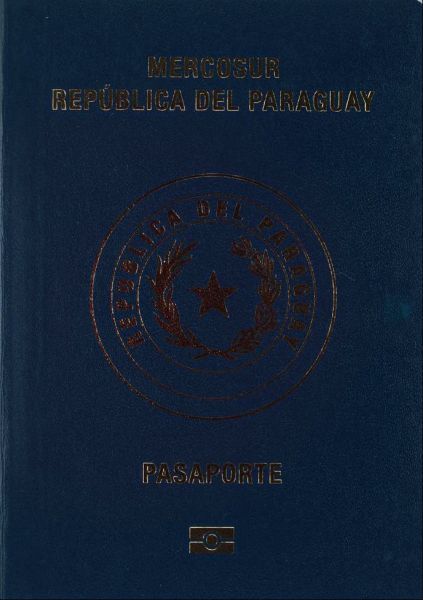
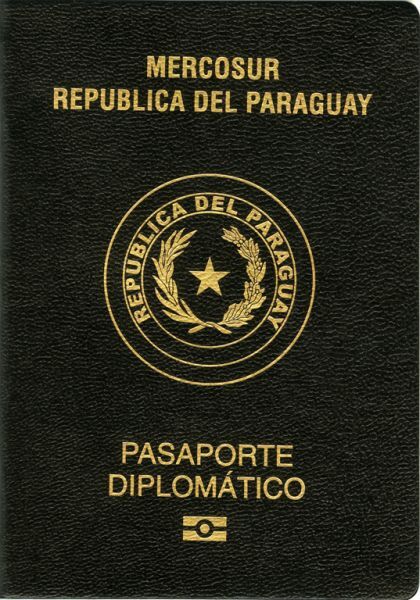
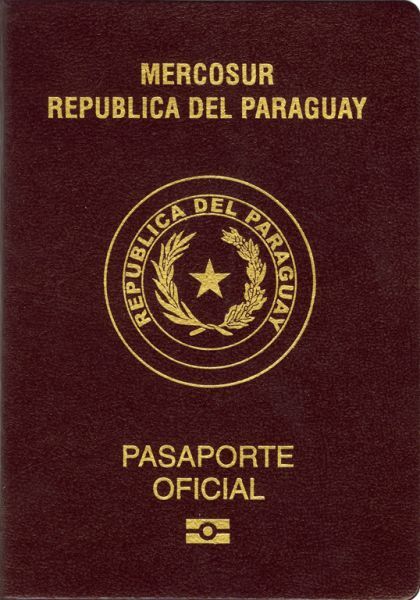

We collected answers to basic questions about terms, permanent residence, Investor Pass, SUACE, accommodation, taxes, dual citizenship and real restrictions of a Paraguayan passport.
No. Individual migration and organizational steps can be started remotely, but citizenship requires a personal procedure in Paraguay. The application for the Carta de Naturalización is submitted through the Corte Suprema de Justicia, and the applicant must prove permanent residence, real domicile, work or other activity, buena conducta and connection with the country.
The constitutional period is three years of radicación in the country, but in practice for most applicants it is considered after obtaining permanent residence. The standard path often looks like temporary residence, progression to permanent residence, then 3 years before filing and a separate process in CSJ. Investor and family routes can speed up obtaining permanent residence.
SUACE is a path for an active entrepreneur through a business project and starting a company. Investor Pass is a more flexible mechanism for investors that allows direct access to permanent residence through investments in tourism, the securities market or real estate. Both routes are important not as a passport for money, but as a way to start the period after permanent residence earlier.
Yes. For citizenship, it is not enough to renew your documents every few years or maintain a formal address. CSJ looks at real domicile, presence, documents, work or business, certificates and absence of long trips. If an applicant maintains their real center of life abroad, this can destroy the radicación continuada argument.
For Paraguay, the issue of multiple nationalities is more complex than in Argentina or Brazil. The Constitution allows it through international treaties and reciprocity. For naturalized foreigners, the applicable rules depend on the country of origin, relevant treaties, and how each status was acquired. Therefore, the second passport must be analyzed before submission, and not after.
Yes. A Paraguayan by birth cannot be forcibly deprived of his nationality, but the Constitution allows for voluntary renunciation. For naturalized citizens, the situation is tougher: their status can be lost through judicial proceedings in the event of an unjustified absence for more than 3 years or in the event of voluntary acquisition of another nationality outside of permissible reciprocity.
No, the passport itself does not create global taxation on the US model. The Paraguayan system is structured around Paraguayan source income. But this does not mean no taxes at all: local business, services, assets, dividends and income associated with Paraguay require separate analysis, registration and correct tax support.
Because residence may be relatively straightforward, while citizenship is not. Naturalization requires permanent residence, physical presence, documented ties to Paraguay (arraigo), good conduct (buena conducta), supporting documents, and a proceeding before the Supreme Court. Timing and outcomes are not guaranteed because the Court assesses the applicant’s genuine connection to the country. Read more: 10 reasons not to pursue a Paraguayan passport.