


























residence qualification:
3-5 years
Depending on marital status
Choose a Jurisdiction
RULATAM Solutions
rulatam
A complete analysis of the naturalization procedure based on current laws. Current rules for obtaining status through the Migration Service.
residence qualification:
Depending on marital status
issuing authority:
Electoral Court through the Legal Citizenship Division
second passport:
renunciation of citizenship:
For example, upon subsequent naturalization in a third country or on one’s own initiative
Short answer
After 3 years of habitual residence with a family in the Republic and after 5 years - without it. A constitutional term in itself does not automatically confer citizenship: one must prove one's ties to the country, legal activities or means, and good behavior.
If your goal is to obtain residence, permanent residence, or a Cédula, start with the separate Uruguay Residence and Permanent Residence page. This page covers only citizenship and the Carta de Ciudadanía after the required period of residence.
With a family formed in the Republic and other conditions being met.
With habitual residence and a confirmed connection with the country.
The procedure for obtaining the Carta de Ciudadanía goes through the Electoral Court.
(update 04/2026)
A critical legal conflict remains in the issuance of passports for international travel: the government of Uruguay confirmed the transition to new ICAO biometric standards (OACI) in April 2026, but the issue of automatic change of the “nationality” field for naturalized persons remains the subject of litigation and pressure from the Inter-American Commission on Human Rights (CIDH). The practice of migration authorities maintains a strict approach to verifying the requirements for actual residence, requiring applicants to provide documentary evidence of “rootedness” (arraigo), which goes beyond simple ownership of real estate.
Legal and economic aspects
In Uruguay, it is important to distinguish between natural and legal citizens. Natural citizenship is obtained by birth in the country, as well as children and grandchildren of Uruguayans born abroad, if they are registered through the Registro de Estado Civil and actually move to Uruguay. Foreigners obtain legal citizenship through naturalization: this requires a good reputation, proven income and compliance with the period of residence. Theoretically, there is also a rare path through the decision of the General Assembly for exceptional merit. For descendants of Uruguayans, the regime is noticeably simpler: laws No. 16.021 and No. 19.362 allow you to obtain status faster than ordinary applicants.
The length of time before citizenship depends primarily on marital status. If a person has a spouse (regardless of gender and citizenship) and is economically integrated into the country - through work, profession, capital or real estate - application is possible after 3 years of habitual residence. For single applicants the standard period is 5 years. The countdown usually starts not from the first entry, but from the moment of registration of the residencia. It is also critical that a long departure can break the continuity of residence: if a person falls out of Uruguayan life for a long time, the Corte Electoral may consider that continuity has been lost. Therefore, residence has to be confirmed by documents: contracts, BPS certificates, studies and other documents with a reliable date.
A Uruguayan citizen receives a full set of political and civil rights, as well as access to public health care and education. A Uruguayan passport also provides an important regional bonus: the status of a Mercosur citizen, that is, the opportunity to live and work in the bloc countries on simplified terms. But legal citizens have restrictions: they cannot vote and be elected immediately, but only 3 years after the issuance of the Carta de Ciudadanía. In addition, some senior positions, including the president and vice president, are reserved only for natural citizens.
Citizens of Uruguay have not only rights, but also very real responsibilities. The main one is compulsory participation in elections: a fine is imposed for failure to appear without a good reason. Another important element is the Jura de la Bandera, a formal oath to the flag, which is required, in particular, for working in the public sector and obtaining certain diplomas. Military service under normal conditions is voluntary, but in exceptional situations the state may resort to mobilization mechanisms provided for by law.
Uruguayan citizenship in itself does not make a person a tax resident and does not automatically subject foreign income to taxation. Taxes arise through the residencia fiscal, and not through the passport. Since 2026, after changes under Law No. 20.446, the system has become more structured: tax holidays on foreign dividends are now tied either to large investments or to actual presence in the country. For individuals, this means a simple thing: citizenship and tax residence in Uruguay are two different topics and should not be mixed. Separately, it is necessary to take into account new international rules like IMCD, which apply to large international structures, and not to an ordinary private investor.
A natural citizen of Uruguay does not lose his nationality: neither for a crime nor for living abroad, nor for any other everyday reason. At most, a temporary suspension de la ciudadanía is possible by a court decision - for example, in the case of a criminal conviction or recognized incapacity. For legal citizens, the situation is more severe: their status may be lost if, after Uruguayan naturalization, they undergo a new naturalization in a third country. This is one of the key risks that must be taken into account when long-term migration planning. The key point is in the wording “Can be lost” and not “Automatically lost”. The decision to revoke citizenship remains at the discretion of the Uruguayan authorities.
One of the most unusual features of the Uruguayan system is the almost absolute inalienability of nationality for naturales. Simply put, a person born in Uruguay cannot normally “exit” this status through the normal administrative procedure, as happens in other countries. The constitutional logic here is this: nationality is not just a document, but an integral property of the individual. In practice, this means that such citizens retain their connection with Uruguay forever, even if they have lived abroad for decades.
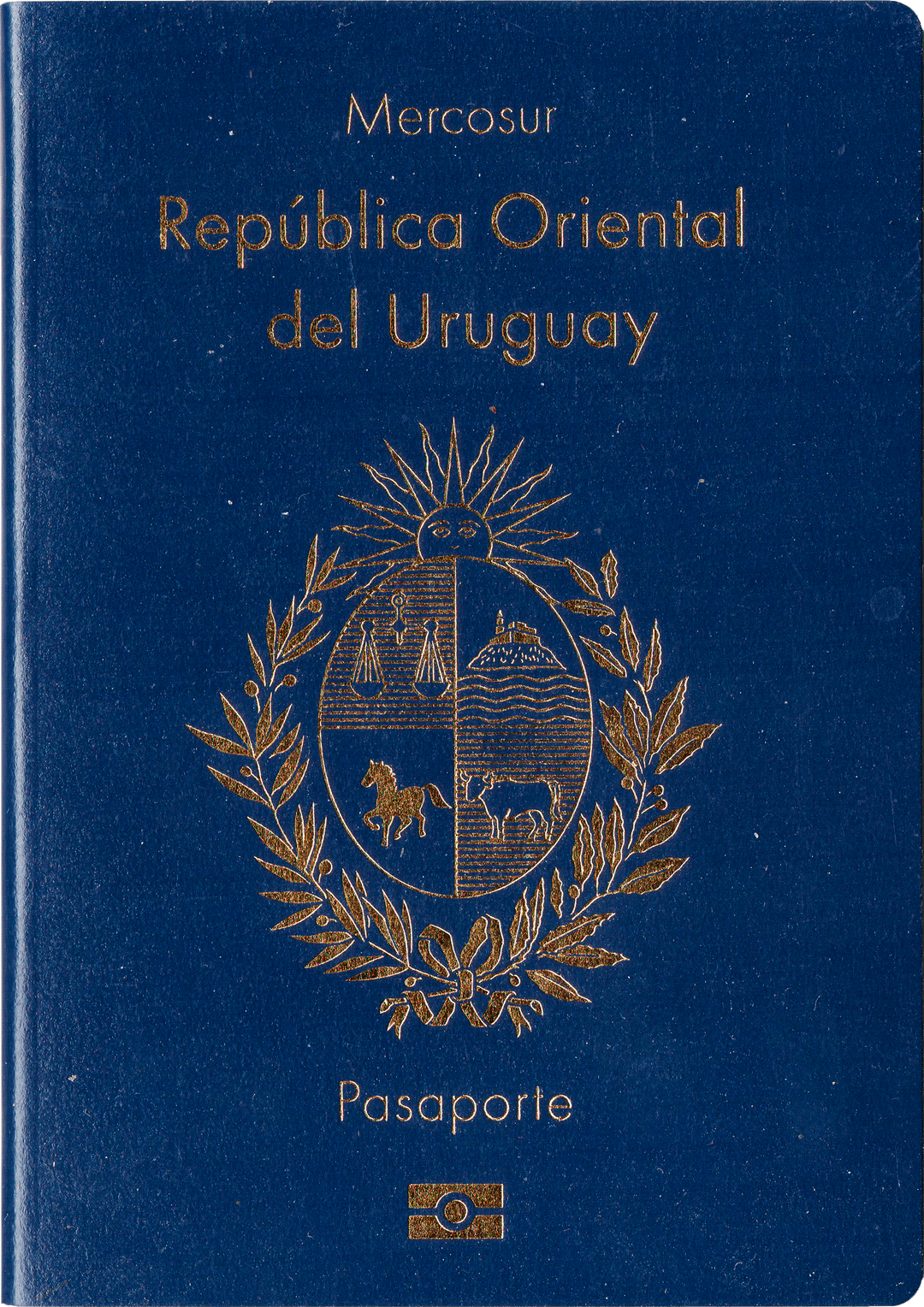
The Uruguayan passport remains a strong and convenient document for international travel. It allows visa-free or simplified entry into many countries, including Schengen, the UK, Japan and most of Latin America. Inside Mercosur, another bonus is also important: you can move freely within the cédula and live in the countries of the bloc. For many clients, this is not just a matter of tourism, but a matter of mobility, an fallback option and normal access to the region without unnecessary bureaucracy.
Family in Uruguay does speed up the path to citizenship, but does not replace it with an automatic right. If the applicant has a familia constituida, the period before filing is reduced from 5 to 3 years. At the same time, one marriage on paper is not enough: you need to show real life together, integration into the country and usually a normal documentary basis. Marriage to a Uruguayan citizen does not in itself provide a passport, but only helps to quickly fulfill the residency requirement.
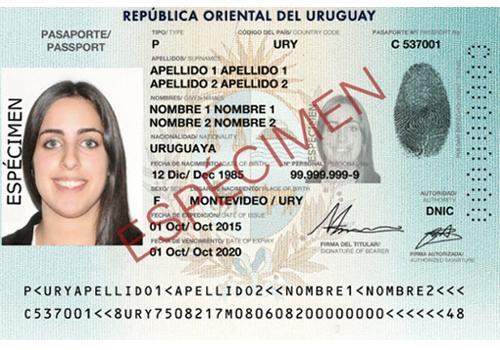
The Uruguayan passport can be used as a full-fledged second passport in an international strategy, but with an important caveat: for legal citizens, it does not always remove references to the country of origin. Formally, Uruguay is not required to notify third countries of the issuance of the Carta de Ciudadanía, and this makes it a convenient jurisdiction for status diversification. But in practice, for naturalized citizens, the country of birth or previous national affiliation may still appear in documents and border systems.
From $2.1 million - tax residency for 11 years. Two tracks and their connection with migration status.
Two years of continuous residence and DNI. Reform DNU 366/2025 has changed the rules - let’s look at what’s relevant.
Argentina, Brazil, Uruguay, Paraguay, Panama, Costa Rica, and Chile - conditions, terms and routes nearby.
Directly, almost nothing. The law did not change the deadlines for citizenship, 3 or 5 years, because they are based on the Constitution rather than tax law. But it has seriously changed the economics of tax residence: from 2026, large investments in real estate have become less of an “easy” entry into long tax holidays. Therefore, for many private clients, residence and physical presence now look more rational than trying to buy status through capital.
No. Children of legal citizens do not become naturales simply because their parents were once naturalized. For natural citizenship, either connection with the territory of birth or descent from natural citizens of Uruguay is important. Therefore, in such families, children usually have to go through their own migration trajectory, although in practice it may be easier due to family connections.
For a legal citizen, this is risky. The constitutional design of Uruguay allows for the loss of ciudadanía legal in the event of subsequent naturalization in another country. That is, if a person was first naturalized in Uruguay, and then deliberately receives another citizenship through a new naturalization, his Uruguayan status may be at risk. For natural citizens there is no such risk.