


























residence qualification:
3-5 years
Depending on the basis for legalization
Choose a Jurisdiction
RULATAM Solutions
rulatam
A complete breakdown of the naturalization procedure in Panama: deadlines, family reasons, reciprocity, renunciation of previous citizenship, taxes, mobility offered by a Panamanian passport and a practical route from residence to citizenship.
Citizenship and passport
The standard route requires five consecutive years as a permanent resident with actual domicile in Panama. For spouses of Panamanian citizens and parents of Panamanian children, the period may be reduced to three years. Time alone does not confer citizenship automatically: the applicant must demonstrate a lasting connection to the country and complete the naturalization process; special reciprocity-based regimes must be assessed separately.
residence qualification:
Depending on the basis for legalization
issuing authority:
Servicio Nacional de Migración and Tribunal Electoral
second passport:
Requires renunciation of first citizenship if possible.
renunciation of citizenship:
Refusal is allowed, the consequences for naturalized people are harsher
(update 05/2026)
In 2026, Panama maintains a rather conservative naturalization model. This is not an “automatic passport for investment” or a technical formality after permanent residence. Even after fulfilling the period of residence, the applicant goes through a full filter: documents are submitted through a lawyer, checked by the migration service, then exams and an integration assessment are included, and the final Carta de Naturaleza is issued not as a routine administrative act, but as a sovereign decision of the state signed by the president of the country. The Panamanian system continues to assume that naturalization is not a price-based service, but admission to the country's body politic.
At the same time, Panama itself remains a very interesting jurisdiction for a strategic route. The reason is simple: the country provides a strong set of permanent-residence options, territorial taxation, a good compliance profile and clear economic logic. But it is important not to confuse residence and citizenship. Permanent residence can be obtained relatively quickly for a number of reasons, including investment-based grounds, but citizenship requires time, domicile, economic solvency, documentary integrity and willingness to undergo the constitutional format of naturalization, including a formal renunciation of previous citizenship.
Legal and economic aspects
Panamanian citizenship is built on three classical grounds: birth, naturalization and special constitutional cases. By birth, citizenship is granted to a child born in Panama, as well as in some cases to children of Panamanians born abroad, if the requirements for registration and subsequent connection with the country are met. For family strategy, this makes Panama a clear jus soli jurisdiction: the child receives Panamanian status from birth, and the parents receive a separate migration track, but not an automatic passport. The country’s logic here is strict: citizenship of a child does not replace the citizenship procedure for adults.
For foreigners, the main route is naturalization. The standard path requires five years of residency as a permanent resident. The accelerated regime applies to persons with a Panamanian spouse or Panamanian children, and there is also a separate constitutional logic of reciprocity for citizens of Spain and a number of Latin American countries, where the period may be shorter. But even in these cases, citizenship does not automatically arise after the qualifying period: you need to collect a dossier, confirm your domicile, undergo verification and convince the state of the seriousness of your integration.
The basic period for naturalization in Panama is 5 consecutive years as a permanent resident. For Panamanian spouses and parents of Panamanian children, a reduced period of 3 years applies. For some countries, based on the principle of reciprocity, even shorter frameworks are possible, but in practice this is not a universal rule “for all Latin Americans,” but a position that must be confirmed separately through the regulatory framework and consular documents. The most important thing here is not to confuse the moment of first entry, temporary migration and the start date of the qualifying residence period: for Panama, it is full-fledged permanent status and real domicile that matter.
The qualifying residence period in Panama is not merely a calendar period. The applicant must show that he is truly integrated into the country: address, documents, tax and household traces, economic viability and no break with Panamanian life. Prolonged absences from the country, the formal nature of permanent residence or loss of residency status can destroy the route. In addition, after the expiration of the deadline itself, a second stage begins: the dossier, verification, exam and waiting for the final decision, which in practice can substantially lengthen the overall path to the passport
Panamanian citizenship provides something that no residence provides: full political status. Only citizens can vote, participate in elections as candidates, and hold significant public office. For some professions this also has practical significance. The Panamanian system is known for the fact that certain professional and economic zones are reserved for citizens, so naturalization is not only a story about a passport and travel, but also a tool for full legal affiliation with the country. For those who are really building a long life or business connection in Panama, this is no longer a decorative status.
In addition to internal rights, Panamanian citizenship also strengthens a person’s international position. It gives access to consular protection, simpler compliance in banks and a different standing on the part of foreign counterparties. A Panamanian citizen is no longer a “foreigner with permission to live”, but a subject with the full right of return, protection and participation in the political and economic life of the republic. Therefore, naturalization in Panama is especially interesting for those who want not only to live in the country, but to gain a foothold in it as a primary home jurisdiction.
The main political responsibility is participation in elections as an element of civic duty. Formally, this is not such a rigid model as in some South American countries, but the very constitutional logic of Panama is based on the fact that a citizen must participate in public life, and not just enjoy the benefits of status. In addition, a citizen is obliged to comply with local laws, maintain a correct fiscal and administrative profile, and not act against the sovereign interests of the country.
There are also more specific responsibilities. Panama does not have a classical army, but retains the state logic of protecting sovereignty and a number of civil responsibilities associated with the institutions of justice and public order. In particular, both citizens and certain categories of long-term residents may be called upon to serve as jurors in cases provided for by law. For a naturalized citizen, the symbolic level is also important: the state expects loyalty, a real connection to the country and the absence of behavior that would call into question the sincerity of the naturalization. This is part of the Panamanian idea of citizenship as a trust, not just a document.
Panama remains one of the most convenient jurisdictions in the region in terms of tax architecture because its system is based on a territorial principle. This means that Panamanian-source income is primarily taxable. For an international entrepreneur, investor or owner of external assets, this is of great importance: the Panamanian status itself does not drag a person into the worldwide-income tax model on the principle of “passport = tax liability”. Here Panama differs sharply from, for example, the United States and from many countries with more aggressive global tax systems.
But it is important not to simplify the picture to the slogan “there are no taxes in Panama.” If the income arises within Panama - wages, rent, local commercial activities, services in the domestic market - it is taxed according to local rules. In addition, for banks, CRS compliance and international tax transparency, not only citizenship is important, but also residence, the center of economic interests and the actual structure of activity. Therefore, Panamanian citizenship is a strong component of international planning, but not a way to eliminate every tax issue. It works well only in conjunction with well-built tax logic.
Panama is formally stricter about dual citizenship than Argentina or Brazil. To be naturalized, the applicant must expressly and unconditionally renounce his or her previous citizenship. This renuncia expresa e irrevocable is included in the package of documents itself and appears not as an optional declaration, but as a mandatory element of the petition. From the point of view of Panamanian law, the state wants to see full political and legal loyalty to the new status, and rather than merely collecting passports. That is why in the top block it is more correct to write not “yes”, but “conditionally”.
However, international practice is more complex than the Panamanian formula itself. If the law of the first country does not recognize such a sworn declaration as a sufficient renunciation of citizenship, the person may effectively continue to be considered a citizen of his or her original country. Then a hybrid situation arises: Panama believes that you refused, and the first country believes that you did not. This is a critical nuance for strategic planning. Panamanian naturalization does not always mean the actual loss of the first citizenship internationally, but for use in Panama itself, the primary citizenship becomes Panamanian, and this must be taken into account in advance.
For natural-born Panamanian citizens, status protection is noticeably stronger than for naturalized citizens. A Panamanian citizen by birth has the strongest possible connection with the country, and the issue is generally not loss of nationality itself, but about narrower consequences associated with civil rights or their suspension in certain legal cases. For a naturalized citizen, the situation is tougher: his status is theoretically more vulnerable, because the state assumes that it was granted according to the procedure, and therefore can be questioned in case of gross violations of its conditions.
In practice, the main risks are fraud, false documents, fictitious family connections, concealment of criminal records or other significant defects in the record. Also, legal behavior that is directly incompatible with the interests of Panama may become a problem if we are talking about service to a foreign state or another conflict of loyalties. In ordinary life, this does not mean that the citizenship of a naturalized Panamanian is “unreliable.” Rather, this means something else: Panama requires a properly documented process and looks more strictly at those who came to citizenship not by birth, but through an application and admission of the state.
The Panamanian passport remains one of Central America's strongest documents. It provides visa-free or simplified entry into many significant jurisdictions, including the Schengen area, the UK, Singapore, the Republic of Korea and much of Latin America. For the client, this is important not only as a tourist option, but also as a working tool for mobility: meetings, negotiations, banking compliance, business visits and the opportunity to maintain a more convenient international position without repeated visa applications. In this sense, a Panamanian passport is a truly powerful asset.
But there is a fundamental clarification. In recent years, Panama has been strengthening its line of investment documents, including special travel documents for certain categories of residents. This should not be confused with a full civil passport. A special or investment travel document does not give all the rights of a citizen and does not replace naturalization. Therefore, if the goal is a strong national passport with full international mobility, the path still remains classic: permanent residence, domicile, period of residence, dossier and naturalization. It is this route that leads to citizenship, and not just a beautiful investment name.
Family ties in Panama can accelerate the route, but does not make it automatic. If the applicant has a Panamanian citizen spouse or Panamanian children, the period before filing for naturalization is reduced from 5 to 3 years. For the state, this looks like a strengthened presumption of integration: the person is already connected to the country through the family unit, and therefore can claim political status earlier. But in practice, you need to show not just a marriage certificate or birth certificate, but a real connection: life together, domicile, documents and a stable center of life in Panama
This is especially important for clients who view Panama through the lens of having a baby. The child receives Panamanian citizenship by birth, but the parents do not automatically receive a Panamanian passport. They get a fast track rather than instant status. Therefore, the family strategy in Panama is not “give birth and everything is ready,” but a longer but understandable structure: the birth of a child, the residence of the parents, integration, a three-year period and then naturalization. For a disciplined family, this is a workable route, but it requires planning, not romantic expectations.
From the point of view of practical migration strategy, Panama is not a country of absolute inalienability of citizenship according to the Argentine type. Here it is more important to distinguish between born and naturalized citizens. For those born in the country, the connection to status is strongest, which is why Panama remains an interesting jurisdiction for families considering childbirth as part of a long-term second-generation architecture. The child receives a strong status from the very beginning of life, and this connection with the state is extremely difficult to dispute. For the family, this means a strong reserve of legal stability for decades.
For naturalized citizens the picture is different. The state admits them to citizenship, but reserves a more stringent power to check whether the admission itself was not obtained on a defective basis. That is why the Panama route needs to be built especially cleanly: without false marriages, nominal investments, paper residence and other schemes. In the Panamanian context, inalienability is not about “they received the passport and then forgot about it,” but about the integrity of the process itself. The cleaner and more realistic the route, the more stable its result.
QIV from $300,000 gives permanent status immediately. Friendly Nations from $200,000 - for two years.
Naturalization through permanent residence, Investor Pass and connection with the country. Full review of the procedure.
Argentina, Brazil, Uruguay, Paraguay, Panama, Costa Rica, and Chile - conditions, terms and routes nearby.
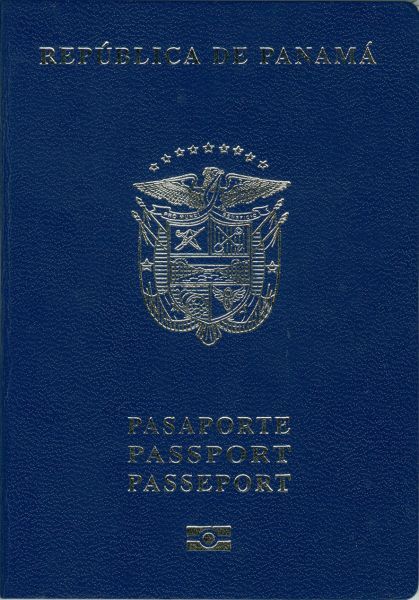
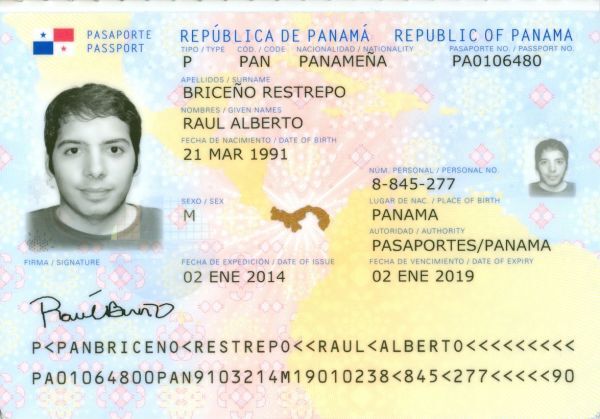
We collected answers to basic questions about deadlines, permanent residence, investments, renunciation of previous citizenship, taxes, family reasons and the stability of a Panamanian passport.
No. An investment may provide a basis for residency and, under some programs, a faster route to permanent residence. It does not grant citizenship automatically through real estate, a bank deposit, or participation in an investment category. After obtaining permanent residence, the applicant must complete the required period, prepare the application file, and go through naturalization.
The standard period is 5 consecutive years as a permanent resident. For Panamanian spouses and parents of Panamanian children, the period may be reduced to 3 years. Special rules may apply to nationals of certain countries under the principle of reciprocity, but the applicable rule must be confirmed for the applicant’s nationality. Both the required period and the applicant’s actual domicile in Panama matter.
Yes, from the point of view of the Panamanian procedure. The application for naturalization requires an express and irrevocable renunciation of previous citizenship. But the international effect depends on the law of the first country. If it does not recognize such a declaration as a full-fledged exit, the person can continue to be considered its citizen outside of Panama.
Yes, renunciation of Panamanian citizenship is possible in the prescribed manner. But the regime depends on whether we are talking about citizenship by birth or by naturalization. For naturalized citizens, the consequences are usually harsher and clearer, and for citizens by birth, the connection with the country is more protected and is not reduced to a simple everyday formality.
No. For Panama, not only the timing is important, but also the strength of the applicant's ties to the country. We need confirmation of domicile, economic solvency, clean criminal history, correct migration profile and normal administrative history. A resident card in itself does not make a person ready for citizenship.
Sometimes yes, but only with a convincing solvencia económica. It can be supported by tax documents, bank letters, business income, pension bases, investments or other transparent sources. For Panama, it is fundamental that the applicant has a transparent and sustainable financial profile.
No. Panama uses a territorial tax logic: the source of income is key, not the passport itself. Panamanian-source income is taxed under local rules, and foreign income generally does not become taxable simply because of citizenship. But residency, banks and CRS compliance need to be designed separately.
Because the Panamanian model is not built on the sale of citizenship, but on consistent integration. The country may be convenient for permanent residence, capital, banks and tax architecture, but the passport is issued after a more serious check: period, domicile, documents, renunciation of previous citizenship, exam and the final decision of the state.