

























1 visit
Personal visit
In a typical scenario, personal presence is required at the final stage: to travel to Costa Rica and receive DIMEX, a resident card.
Choose a Jurisdiction
RULATAM Solutions
REMOTE FILINGPATH TO A PASSPORT
Resident route
By applying under a suitable legal basis and documenting that you meet its requirements. Immigration to Costa Rica is completely remote - one visit only to receive DIMEX. Rentier, investor, nomad or pensioner. Passport after 7 years.
Costa Rica is one of the few destinations where the immigration process can be built remotely, without constant flights and repeated bureaucratic trips.
For the client, this means a simple thing: you do not fly into the country for every step, but appear in person only when it is really needed.
And unlike Bali, Vietnam and other popular “warm” destinations, here we are not talking about endless extensions without a horizon, but about official status, which in the long run leads to permanent residence and citizenship.
Personal visit
In a typical scenario, personal presence is required at the final stage: to travel to Costa Rica and receive DIMEX, a resident card.
First status
Your first status in Costa Rica is temporary residence. The legal route begins with it: with the right to live in the country and move towards permanent residence.
Review period
Review of the application takes time. This is not a quick scheme, but a formalized procedure with clear legal logic.
Period until permanent residence
As a general rule, after three consecutive years of temporary residence, the right to apply for permanent residence arises.
Time to citizenship
If the goal is not just to live in the country, but to get a second passport, Costa Rica provides an official long route for this.
The power of a passport
A Costa Rican passport allows for wide visa-free access, including Schengen, the UK, Japan and most Latin American countries.
Immigration to Costa Rica is not organized according to the “arrive and somehow extend” model, but through formal migration categories. The basic route for most clients is a temporary residence for up to two years with the possibility of extension. The basis depends on the case: rentier, investor, pensioner or professional categories.
The main difference between Costa Rica and popular “warm” destinations is that here you can build more than a temporary stay, but a long official status. As a general rule, after three consecutive years of temporary residence, the right to permanent residence arises. It is important to distinguish residence from special categories (for example, Digital Nomad), which do not always lead directly to status.
For RULATAM clients this means a simple thing: first we select the right category for your needs, then we complete the process until we receive DIMEX and build a route to citizenship. In investor cases, it is important to remember a technical nuance: for residency, the property must be registered in the name of an individual, not a company.
The legal profile shows what norms the migration route is based on: the status of a foreigner, the integration logic of the law, the requirements for wealth and the protection of family grounds.
Constitución Política, art. 19
“Foreigners have the same individual and social rights and obligations as Costa Ricans, subject to the exceptions and limitations established by this Constitution and laws.”
Supreme legal power
«Los extranjeros tienen los mismos deberes y derechos individuales y sociales que los costarricenses, con las excepciones y limitaciones que esta Constitución y las leyes establecen».
Ley de Migración Nº 8764, art. 5
“This law will contribute to the integration of migrants into the development of the country; To this end, the Migration Service will develop strategies aimed at strengthening the sustainability of the rule of law.”
Development priority
“La presente ley fomentará la integración de las personas migrantes al desarrollo del país; para ello, la Dirección de Migración y extranjería diseñará estrategias and políticas públicas...”
Reglamento de Extranjería, art. 22
“In cases where an application for a migration category requires confirmation of the applicant’s solvency, it must be confirmed by one or more of the listed documents.”
Technical standard
«En los casos cuya solicitud de categoría migratoria implique la demostración de solvencia económica... deberá demostrarla mediante alguno o varios de los documentos que se mencionan...».
Sala Primera, Sentencia 000930-F-S1-2010
“...in matters of family reunification, the persons concerned have a fundamental right, but this does not eliminate the power of the state to establish requirements that must be met.”
Legal precedent
«…en materia migratoria por reunificación familiar a los interesados les asiste un derecho fundamental, sin embargo, esto no enerva la potestad del Estado de establecer requisitos...».

Banking vicious circle, restrictions while an application is pending and driver's license - three systemic pitfalls when registering a residence in Costa Rica.

The visa run model has exhausted its legal resources in Thailand and Indonesia. We compare tourist suspension against official status, DIMEX and the route to permanent residence and citizenship of Costa Rica.

Four jurisdictions - four classes of tasks. We compare not countries, but architecture: life, banks, capital and reserve status.
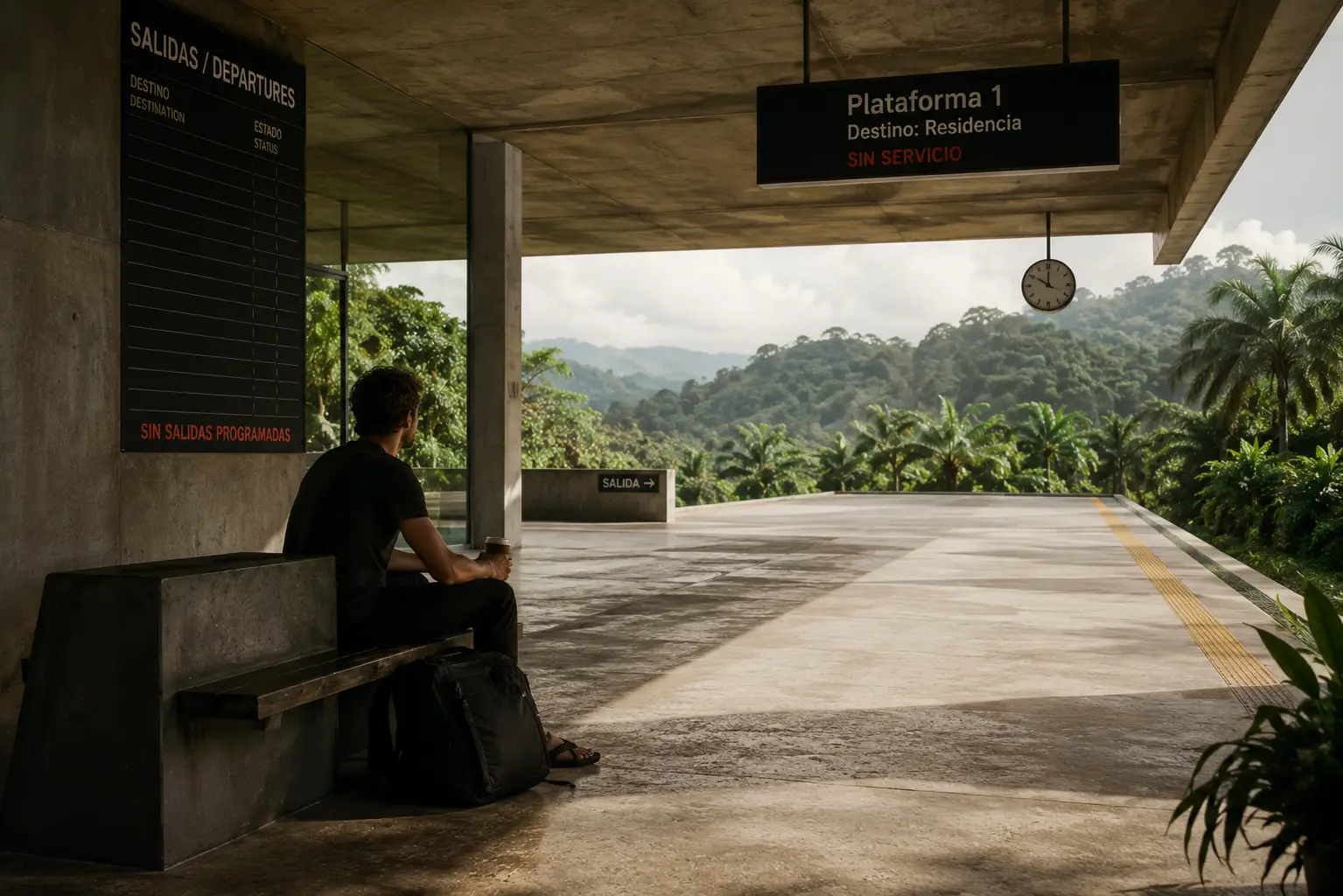
Law No. 10008 classifies Digital Nomad as a non-resident. Time in this status does not count towards permanent residence and citizenship. Let's look at the legal anatomy of a trap.
Costa Rica does not offer a one-size-fits-all route. Here everything is built through a specific migration category: the source of income, the format of employment and the purpose of the move itself have legal significance. That is why the question is not “whether it is possible to obtain a residence”, but which legal basis is appropriate.
For one client, the logical route would be the rentier category. For another, the investor category. For a third - a pensioner.
And the special status of a digital nomad, for all its attractiveness, generally solves a different problem and is not always suitable for those who are seeking permanent residence and citizenship.
Below are the main programs we work with in practice, and the logic of each of them.
Inversionista
Requires an investment of at least $150,000. This could be real estate, securities or business projects. An important condition: to obtain the status, the property must be registered in the name of an individual, not a company.
Rentista
Suitable for those who have a stable passive income of at least $2,500 per month from foreign sources. It is necessary to prove that the payment is guaranteed for a period of at least two years. An ideal track for remote business owners.
Pensionado
Applicable if you have a lifetime pension of $1,000 or more per month. At the same time, the status of a pensioner or rentier in Costa Rica, as a general rule, does not give the right to paid employment within the country, but allows you to run your own business.
Nómada Digital
A special category for remote workers with an income of $3,000 or more. This is a convenient “quick” status for life, but it is important to take into account that it belongs to special categories and has its own specifics in terms of long-term transition to permanent residence.
The first and main status for most clients. It is registered according to a specific category - rentier, investor or pensioner - and initiated remotely. You are not tied to a country and appear in person only at the final stage to receive DIMEX.
The next level of status after temporary residence. This is a more stable and long-lasting format of legalization for those who want not only to stay in the country, but to consolidate their legal position for a long time. It is through this stage that the path to citizenship is built.
This is not a bonus, but the final stage of the legal route. The right to naturalization arises after 84 months of presence in the country. This is why Costa Rica is interesting not only as a country to live in, but also as a jurisdiction with a real path to a passport.
1
We determine the correct basis: rentier, investor, pensioner or corporate category. In Costa Rica, the entire further route depends on this.
2
We check documents, coordinate translations, apostilles and other formalities. The task is to file the case correctly the first time and not waste months.
3
Lawyers submit an application without the need for your constant personal presence. While the case is pending, you can stay where you want.
4
After approval, you come to Costa Rica for the final stage and receive a DIMEX - a resident card. A personal visit is only needed at the very end.
Obtaining the first official status with category selection and support up to DIMEX
What's included:
Overhead costs and government fees are paid separately
Select packageGuidance on the route from first entry to permanent residence
What's included:
Overhead costs and government fees are paid separately
Select packageNEW
Full strategic support of the trajectory until the right to a passport arises
What's included:
Overhead costs and government fees are paid separately
Select packageThe package structure in Costa Rica is simple: you pay RULATAM for the full support throughout your immigration process, and not for a separate formality or “submitting a form”. The basic package covers legal and organizational work on the case - from choosing a category to receiving DIMEX.
Government fees, translations, notary and other overhead costs are paid separately, because they depend on the category, family composition and characteristics of the case.
This approach is transparent: you understand in advance what is included in our fee, and what costs arise within the procedure itself.
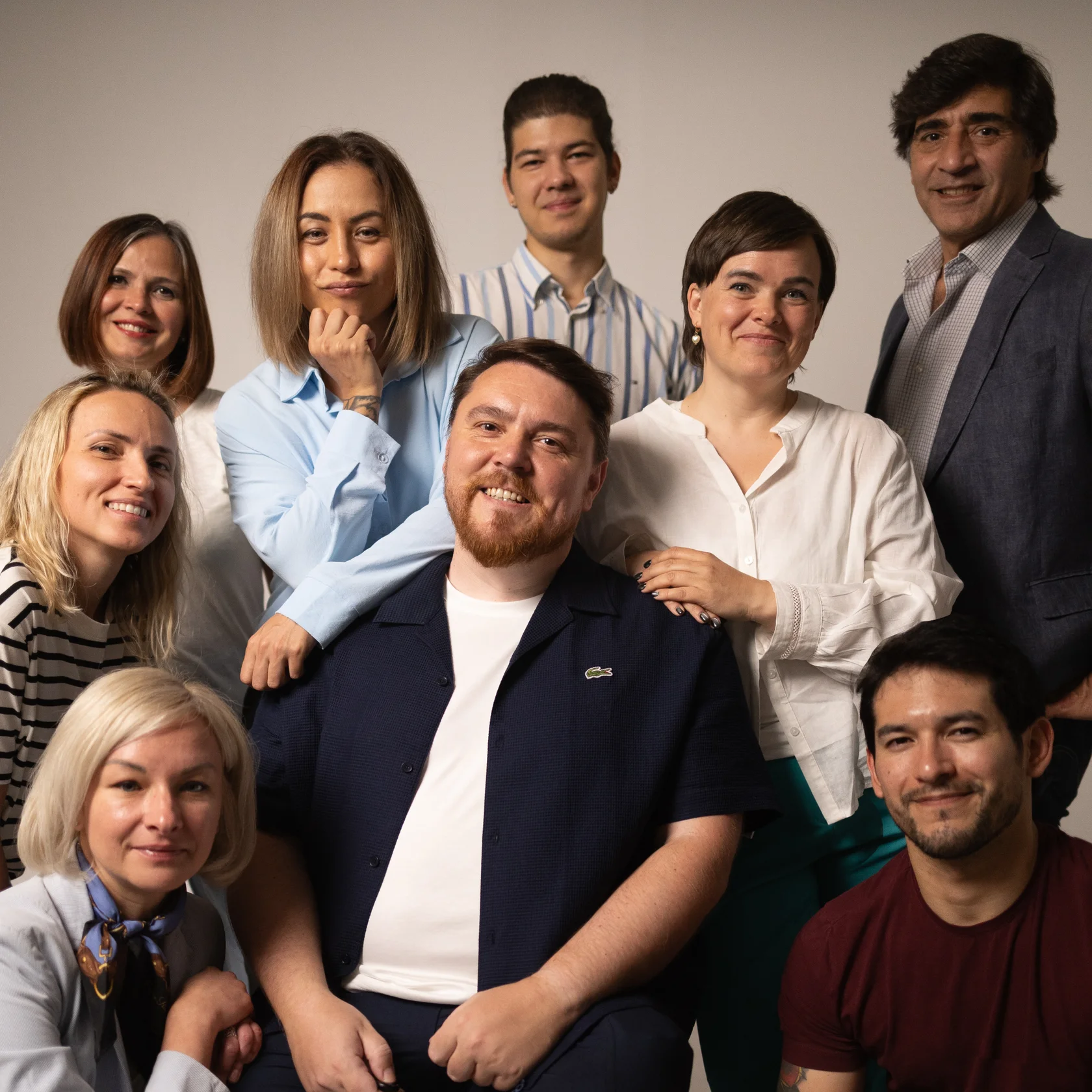
RULATAM is an extension of RuArgentina®
In 2016, we created the first immigration support project in Argentina, and in 2017 we launched a childbirth-support service. Since then, we have managed to assemble a team of experts and like-minded people in key countries in Latin America, uniting them into the RULATAM ecosystem.
In Costa Rica, we have built partnerships with leading legal and accounting firms that meet the needs of clients depending on their profile. We control the formulation of requests, documents and stages of the process so that the values of RULATAM work for the result and security of a long-term strategy in the region.
Publications about RuArgentina®, RULATAM® and their founders in major international publications

























In immigration, non-anonymous reviews are especially valuable: behind each such text there is a person who publicly associates his real experience with a specific team, country and procedure.

Big thanks to Kirill for the consultation! He was incredibly helpful in walking me through everything related to relocating to LATAM. His answers were clear, to the point, and highly professional - you can tell he truly knows his field :)
Read reviewKirill, thank you for your invaluable help in obtaining legal residence in Argentina. You have transformed the way immigration support is provided to Russian-speaking clients.
Read reviewKirill, thank you very much for your help with immigration matters. You answered every question clearly and completed the work quickly and professionally.
Read reviewI had an online consultation. In 30 minutes, we got answers to all our questions and saved a great deal of time we would otherwise have spent researching on our own.
Read reviewKirill gave me a useful consultation, answered every question, and suggested a solution I had not considered. I recommend his services.
Read reviewThank you, Kirill, for the thorough and helpful advice. I am very glad I found this kind of support in a new country.
Read reviewKirill accompanied us until we received the DNI. We were very pleased with all stages of cooperation: from preparation of documents to on-site support. He was always in touch and responded promptly.
Read reviewThe support was organized at a high level. They helped us navigate the situation and even advised us on a number of minor everyday issues. The clinic, doctors and medical service are also at the highest level.
Read reviewI booked a remote consultation about moving to Argentina. The service was professional, clear, and focused, and all my questions were answered.
Read reviewI booked a paid phone consultation. It was clear, focused, and free of unnecessary detail. I needed confirmation of information I had found in public Spanish-language sources.
Read reviewI used Kirill's services and was satisfied. Everything was done according to our agreement. Kirill was always in touch.
Read reviewI am grateful to Kirill for the quality of his services, the RuArgentina resource, the wealth of useful information in its chats, and the way those communities are managed.
Read reviewWe had a consultation about citizenship, childbirth, and moving to Argentina and were extremely pleased. The information was clear, useful, and actionable.
Read reviewKirill explains things clearly and only speaks to matters he knows firsthand. His free Telegram channels are a valuable source of practical, reliable information.
Read reviewI consulted Kirill about relocation. He gave me all the information I needed, answered my questions, and was knowledgeable, approachable, and easy to work with.
Read reviewKirill quickly helped us build a plan and connect with a supportive Russian-speaking community. He set clear expectations and fulfilled his commitments.
Read reviewCommunication with RuArgentina by email and WhatsApp was dependable, timely, and thorough. The support during medical appointments, childbirth, and day-to-day matters was excellent.
Read reviewI would like to express my gratitude to the team for their support and professionalism during the most important event in our lives. From start to finish I felt in good hands.
Read reviewI would like to thank the staff of RuArgentina for an excellent birth experience. Together we selected an obstetrician-gynecologist, and every visit to the doctor was comfortable and friendly.
Read reviewYou can hire a translator, rely on Google Translate, or work with Kirill and his team. Moving to another country is stressful. Thank you for saving us so much stress.
Read review* Ecosystem includes RuArgentina, go.ruargentina.com and baby.ruargentina.com; In total, more than 100 reviews were collected on several moderated sites, including Google Maps and TripAdvisor. The indicated rating of 4.8 is calculated based on 20 reviews for the product “Immigration to Argentina” in Google Maps - the oldest project in the RULATAM ecosystem, which grew out of RuArgentina.
Reviews of immigration services should be treated as a source of evidence, and not as an advertising slogan: real names, primary sources, repeatability of details, deadlines, documents and stages of the process are important. More details: how to read reviews about immigration services.
Answers to key questions about residence permit, DIMEX, permanent residence and citizenship of Costa Rica.
Yes. The process can be structured remotely through powers of attorney issued in the name of local lawyers. In a typical scenario, a personal visit is needed only at the final stage - to submit fingerprints, take photographs and obtain a DIMEX (Costa Rican identity card).
DIMEX is the national resident card of Costa Rica. It is this document that confirms your migration status within the country.
No. There is no need to be permanently in the country during the consideration stage. This is one of the key advantages of Costa Rica as an immigration destination. However, the time spent in the country while waiting for migration status is included in the calculation when obtaining citizenship.
The reference period for consideration is 12–16 months. The exact period depends on the category, family composition and current administrative practices.
In practice, the categories most often considered are “rentier”, “investor” and “pensioner”. For individual tasks there are also corporate and special migration categories.
There is a separate special migration category for digital nomads. But it is important to understand that this is not always a direct route to permanent residence and citizenship.
For the rentista category, you need a confirmed stable income of 2,500 USD per month for a period of at least two years.
The basic threshold for the investor category is USD 150,000. For reforestation projects, a lower threshold applies - from 100,000 USD.
No. The investor and his dependents are not eligible to work for hire in Costa Rica.
Yes. In many categories of migrants in Costa Rica, spouse and children can be included as dependents if documents proving the relationship are prepared.
Yes. Temporary residence is the first status in a long legal route. Further, a transition to permanent residence is possible if the conditions of the selected category and legal requirements are met.
Yes. This is one of the main advantages of the country: legalization can lead not only to temporary status, but also to citizenship in the long term.
Because here we are not talking about endless extensions without a final goal, but about a legal route to permanent residence and citizenship.
In a typical scenario, one personal visit is enough - at the final stage, when you need to provide fingerprints, take photographs and receive DIMEX.
The information is for informational purposes only and does not replace individual legal advice.
Costa Rica is not universal. We will help you understand whether you need it at all, and if so, in what capacity: as a country for residence, banks, assets or a broader structure.
Contact an expert