


























residence qualification:
2-7 years
Depending on the basis for legalization
Choose a Jurisdiction
RULATAM Solutions
rulatam
A complete breakdown of the naturalization procedure in Costa Rica: length of residence, family reasons, Spanish language requirements, exam, good standing, taxes, dual citizenship and strength and stability of the Costa Rican passport.
Citizenship and passport
Through statutory naturalization after meeting residency and applicant requirements. A complete breakdown of the naturalization procedure in Costa Rica: length of residence, family reasons, Spanish language requirements, exam, good standing, taxes, dual citizenship and strength and stability of the Costa Rican passport.
residence qualification:
Depending on the basis for legalization
issuing authority:
Tribunal Supremo de Elecciones through Registro Civil and Sección de Opciones y Naturalizaciones
second passport:
The country recognizes the possibility of holding other passports
renunciation of citizenship:
Citizenship is not lost and is recognized as inalienable
(update 05/2026)
In 2026, Costa Rica remains one of the most stable constitutional systems in Central America, but cannot be described as a “fast passport.” Naturalization here is not built around an investment or formal purchase of status, but around official residence, domicile, good reputation, Spanish language, an exam on the country's history and values, and a promise to continue regular residence in the republic. Therefore, Costa Rica is good for those who are ready to build a real connection with the country, but not a good fit for those who are looking for a passport without life, language and administrative discipline.
After the reform of Ley 10508 of 2024, the Costa Rican system has become noticeably stricter in relation to the criminal history of the applicant. Naturalization is now not granted to a person who, within the last 10 years, has been definitively convicted of an intentional crime with a penalty of more than 3 years in prison, if such an act is also recognized as a crime in Costa Rica. This does not negate the liberal character of the country, but it changes the practical preparation of the dossier: certificates of good conduct, classification of the offense and explanation of political or controversial cases become an important part of the strategy.
Legal and economic aspects
Costa Rican citizenship is based on a combination of jus soli, jus sanguinis and naturalization. A child of foreigners born in Costa Rica can be registered as a Costa Rican by the will of the parents while he is a minor, or by his own will until he is 25 years old. Children of Costa Rican citizens born abroad can also obtain status through registration with the Registro Civil. This makes the Costa Rican model flexible: the country recognizes both territorial and family ties, but formalizes them through a civil registry, rather than through automatic political admission of all relatives.
For adult foreigners, the main path is naturalization. It is possible through official residence in the country, through marriage to a Costa Rican citizen, through separate procedures for persons with long-term domicile and through the trascendencia mechanism for minor children of naturalized parents. Investors, pensioners, rentiers and other residents do not receive a separate “passport” track: their status may be a good basis for living in the country, but then they follow the standard constitutional logic of naturalization.
The key period depends on the origin of the applicant. For citizens of Central America, Spain and Iberoamerica by birth, a period of 5 years of official residence applies. For other foreigners - including citizens of Russia, Ukraine, CIS countries, the USA, Canada and most European countries outside the Spanish-Ibero-American logic - the standard period is 7 years. These are constitutional terms, so they are not superseded by real estate purchases, investment status, or tax residence.
Not only the calendar is important, but also the nature of the residence. Costa Rica requires a residencia oficial and domicile: the applicant must show that the country is his real base of life and not just an address in the immigration case. Short trips in themselves do not destroy the route if housing, documents, center of interests and residency status are preserved.
If a person does not actually live in the country and cannot explain his connection with it, a formal term may be a weak argument before the Registro Civil and TSE.
Costa Rican citizenship confers full political status: the right to vote, participate in public life, and apply for most positions available to citizens. Restrictions remain for some senior positions, most notably the presidential level, where citizenship by birth is required. For ordinary life, business, family and long-term status, a naturalized citizen receives a fundamentally different level of protection than a resident: his right to live in the country no longer depends on the renewal of a migration card.
Costa Rican citizenship also strengthens a person's international and regional position. It gives access to consular protection, facilitates compliance with banks and allows you to be perceived not as a temporary foreigner, but as a citizen of a stable democratic country. For many clients, this is not only a matter of travel, but also a matter of legal identity: Costa Rica has a reputation as a state without an army, with strong institutions, a stable electoral system and a relatively predictable public administration.
The status of a citizen of Costa Rica includes the duties enshrined in Article 18 of the Constitution: to obey the laws, protect the interests of the country and participate in public expenditures. Unlike many countries in the region, Costa Rica does not have a regular army, so there is no classical conscription. This is an important part of national identity: the state builds security not around the army, but around civilian police, institutions and international legal positions.
Participation in elections in Costa Rica has the character of a civic function and political obligation, but in a practical sense does not work as a rigid system of fines for non-attendance. The main real burden for a citizen is normal legal and tax discipline, respect for the constitutional order, correct relations with the Registro Civil, tax administration, social funds and courts. For a naturalized citizen, it is especially important that behavior after receiving a passport does not look like evidence of a fictitious connection with the country.
Costa Rica uses a territorial tax model. This means that the basic logic of taxation is built around the source of income, and not around the passport. Citizenship itself does not convert foreign dividends, pensions, capital or income from a foreign company into automatically taxable worldwide income. If the source is located outside of Costa Rica, its tax qualifications must be analyzed separately, especially if the person works remotely, receives income from abroad, or manages assets through foreign entities.
But the territorial principle does not mean “no taxes.” Income from Costa Rican sources, local activities, work in the domestic market, rental of real estate in the country and other transactions within the republic may be taxed according to Costa Rican rules. Separately, you need to design tax residence, bank compliance and confirmation of the origin of funds. Therefore, a Costa Rican passport is convenient as an element of an international strategy, but it does not replace tax planning and does not relieve one from analyzing a specific income structure.
Costa Rica takes a liberal stance on multiple citizenship. After the reform of Article 16 of the Constitution, Costa Rican citizenship cannot be lost and is inalienable under the current constitutional wording. In practical terms, this means that a Costa Rican citizen does not lose status simply because he receives a passport from another country. This is in contrast to more restrictive jurisdictions, where subsequent naturalization may pose the risk of losing previously acquired citizenship.
For a foreigner who naturalizes in Costa Rica, the issue is more complicated at the first country level. Costa Rica does not base its modern system on the idea of automatic loss of the first citizenship, but the law of the original state may establish its own rules: notifications, prohibitions, military, tax or consular consequences.
Therefore, the correct formula for the client is this: Costa Rica allows sustainable multiple citizenship, but the consequences of a second passport must be assessed not only according to Costa Rican law, but across the full set of relevant jurisdictions.
The main feature of Costa Rica is its very strong constitutional protection of citizenship. Article 16 explicitly states that Costa Rican citizenship cannot be lost and is inalienable under the current constitutional wording. This makes the Costa Rican passport one of the most stable in the region. Taking on a different nationality, living abroad for a long time, or changing personal strategy should not, in and of themselves, lead to automatic loss of citizenship.
However, protection of an existing status should not be confused with the revocation of naturalization obtained fraudulently. Ley 1155 provides that naturalization obtained in violation of requirements, false data or concealment of significant circumstances may be invalidated. After the 2024 reform, this logic became stronger for criminal risks. Therefore, Costa Rican citizenship is stable, but only if the case itself was prepared properly: without fictitious domicile, false certificates, hidden verdicts and artificial financial profile.
Costa Rica is one of the few countries in the region where the inalienability of citizenship is stated so explicitly. The constitutional formula “no se pierde y es irrenunciable” means that the state does not treat citizenship as an ordinary administrative license that can simply be renounced or that can be lost due to a second passport. For clients looking for long-term status stability, this is a strong argument in favor of Costa Rica.
In practice, this is especially important for families and the second generation. A child or adult who has legally acquired Costa Rican status receives not just a travel document, but a very stable legal connection with the state. For international planning, this creates a rare combination: a lenient multiple citizenship regime, a territorial tax logic and a high level of protection of the status itself. The disadvantage of this model is speed: Costa Rica provides stability, but does not promise a fast passport.
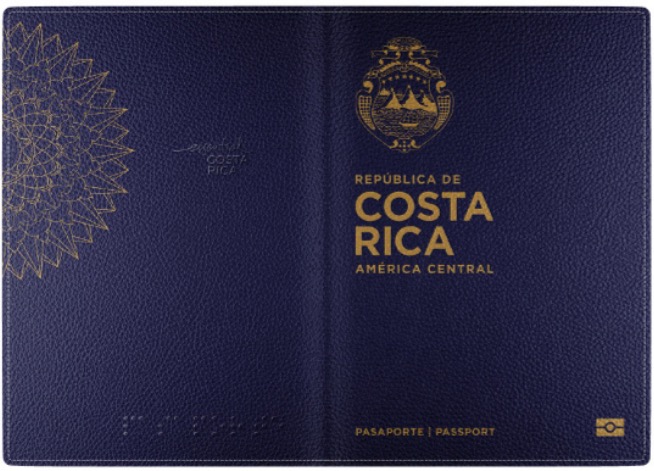
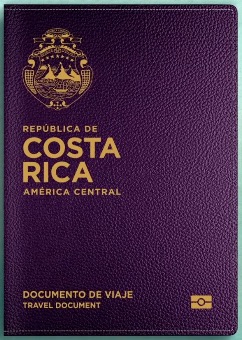
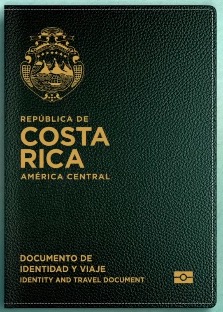
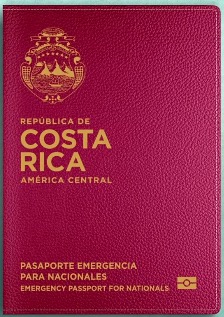
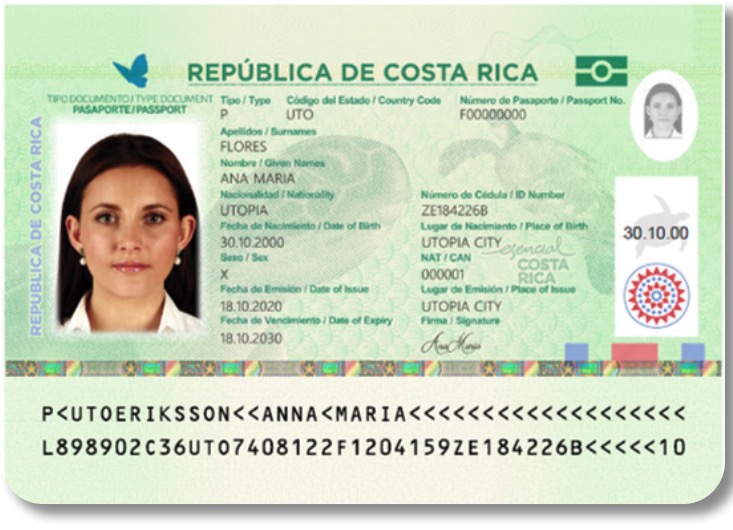
The Costa Rican passport is one of the strongest Central American passports. It provides visa-free or simplified entry into many countries, including the Schengen area, the UK, Ireland, Japan, the Republic of Korea and much of Latin America. The US, Canada and Australia generally require a visa, so the Costa Rican passport should not be sold as a universal key to all destinations. Its strength lies in the balance of mobility, the country's reputation and the stability of its civil status.
For RULATAM clients, this passport is interesting not only for its tourist mobility. Costa Rica is perceived as a stable, environmentally friendly, institutionally mature jurisdiction with a good international profile. This is important for banking, children's education, living between multiple countries, and stable second-citizenship strategies. But passport mobility should not replace legal reality: the path to it requires residence, domicile, language, exam and time.
Family ties in Costa Rica can significantly change an applicant's route. Marriage to a Costa Rican citizen allows you to apply for naturalization after 2 years of marriage and residence in the country for the same period. This is not an instant passport or a formal bonus to a marriage certificate: the relationship must be real, registered and documented. TSE and Registro Civil look not only at the registry entry, but also at whether the person has actually lived in the country and integrated into the Costa Rican system.
The birth of a child in Costa Rica is also important, but it should not be confused with the automatic naturalization of the parents. A child born in Costa Rica may acquire citizenship under the country’s birthright rules, while the parents may gain a strong basis for residence. The parents follow a separate naturalization path based on their own residence, time in the country, Spanish, the required exam, good conduct, and financial circumstances. Therefore, the family strategy in Costa Rica works, but requires a longer horizon than in countries with accelerated citizenship for parents.
Purchasing real estate as a direct basis for a residence permit. How the program works and what its conditions are.
Uruguay passport after 3 or 5 years of residence. Carta de Ciudadanía and real deadlines.
Argentina, Brazil, Uruguay, Paraguay, Panama, Costa Rica, and Chile - conditions, terms and routes nearby.


We collected answers to basic questions about deadlines, residence, family reasons, language, exam, taxes, dual citizenship and the stability of a Costa Rican passport.
No. Costa Rica does not have a direct citizenship by investment program. The purchase of real estate or investment status may provide the basis for residence, but does not replace the constitutional deadline for naturalization. For most Russian-speaking applicants, this is 7 years of official residence, domicile, Spanish language, exam and a clean dossier.
The duration depends on the origin. For citizens of Central America, Spain and Iberoamerica by birth, there is a period of 5 years of official residence. For other foreigners - 7 years. For spouses of Costa Rican citizens, a separate path is possible after 2 years of marriage and residence in the country, if the relationship is real and registered.
Yes. The constitutional logic of naturalization requires that the applicant be able to speak, read and write Spanish, and also pass an exam on the country's history and values. This is not a formality for show: Costa Rica is testing integration. Therefore, it is better to include the language and exam in the itinerary in advance, and not leave it for the final year.
No. A child born in Costa Rica may acquire citizenship under the country’s birthright rules, but the parents do not automatically become citizens. The child’s birth may support a residence application; the parents must then complete a separate naturalization process with its own residence, domicile, document, Spanish-language, exam, and good-conduct requirements.
Costa Rica does not build its modern system around the automatic loss of first citizenship and recognizes that the quality of being a Costa Rican is not lost due to another nationality. But the consequences must always be checked according to the law of the first country. That country's law may establish notifications, bans or other restrictions for its citizens.
According to the current constitutional formula, the quality of the Costa Rican is not lost and is inalienable. Therefore, Costa Rica cannot be described as a country where citizenship is easily terminated by a simple application. This is a plus for international strategy: the status is very stable. But conflicts with the laws of third countries require a separate assessment.
No. Costa Rica uses a territorial tax model: it is the source of income that matters, not the passport itself. Income from Costa Rican sources is taxed according to local rules, but foreign income requires separate analysis. The passport does not replace tax planning, bank compliance and confirmation of the origin of funds.
Because the country prioritizes stability over speed. For most applicants, the path takes 7 years of official residence and requires real domicile, Spanish language, exam, livelihood and good reputation. This is not a migration life hack, but a long status route to a stable jurisdiction.